Hot-water surface cleaning that erases oil stains, rust, tire marks and years of embedded grime — leaving concrete bright.
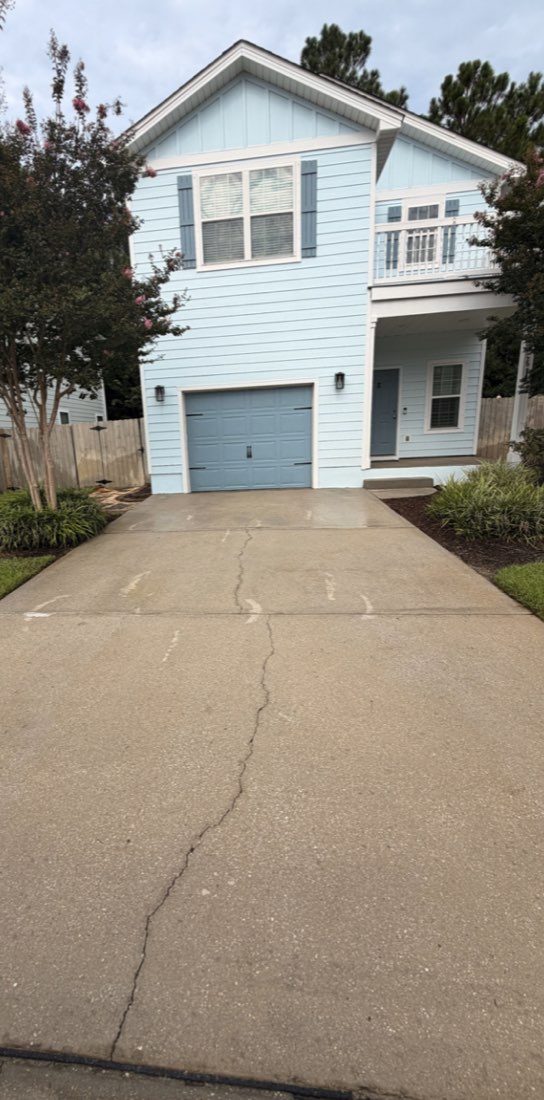
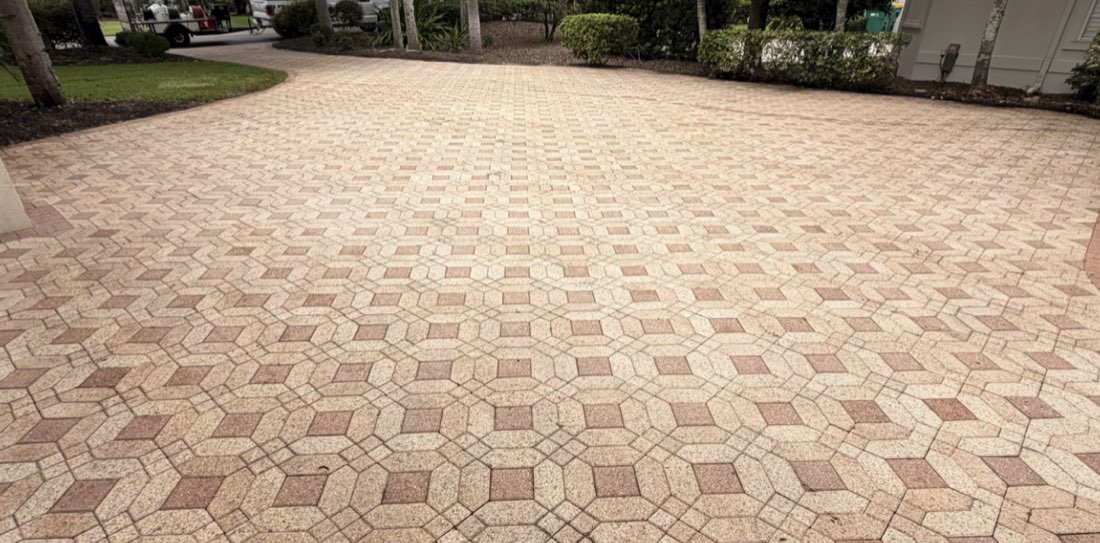
A swirling wand leaves stripes and zebra marks that never fully disappear. We use a surface cleaner at concrete-safe pressure for a consistent finish across the whole slab, then detail the parts a surface cleaner cannot reach.
Get a free concrete quoteThe three problems that make a driveway look older than it is.
Degreaser and rust treatment go on before any water, which is the only way those stains actually lift instead of spreading.
Hot water breaks down the rubber and road film that cold water just pushes around.
The dark gray film in the low spots is biological. Treated properly, concrete comes back several shades lighter.
Pre-treat, surface clean, detail. In that order, every time.
Oil spots and rust get a targeted degreaser and dwell time before the surface cleaner ever touches them.
A hot-water surface cleaner works the slab evenly at a pressure concrete can take, with no wand stripes left behind.
Edges, expansion joints and transitions are cut in by hand, then the whole area is rinsed down and blown clear.
We start by looking at what's actually staining the concrete, because oil, rust and general grime don't always respond to the same treatment. Heavy stains get pre-treated before the main clean so they actually lift instead of just lightening. Edges, corners and anywhere a wand can't reach cleanly get worked by hand, which is usually the difference between a driveway that looks professionally done and one that looks like someone ran a machine over it once.
The main clean itself uses a hot-water surface cleaner — a spinning bar under a covered head that cleans evenly across the whole slab instead of leaving the overlapping stripes a hand-held wand always leaves behind. Hot water lifts oil and grease in a way cold water alone can't. The surface is usually dry enough to walk on within an hour, though full cure time for any sealant depends on humidity and direct sun.
What to expect on a driveway job.
Most will. Oil that has been sitting for years can leave a shadow, and rust from irrigation or fertilizer sometimes needs a second treatment. We will tell you honestly what we expect to get out before we start.
It can, in the wrong hands — too much pressure on old or spalling concrete will etch it. We match pressure to the condition of the slab, which is why we look at it before quoting.
Sealing makes future cleans much easier and helps resist oil, though it is not required. We can apply a sealer after cleaning or simply point out whether we think yours needs it.
Concrete is usually walkable within an hour and dry enough to park on the same day. If we seal it, we will give you a specific cure time before we leave.
Send a photo or book a quote — we will give you an honest number.